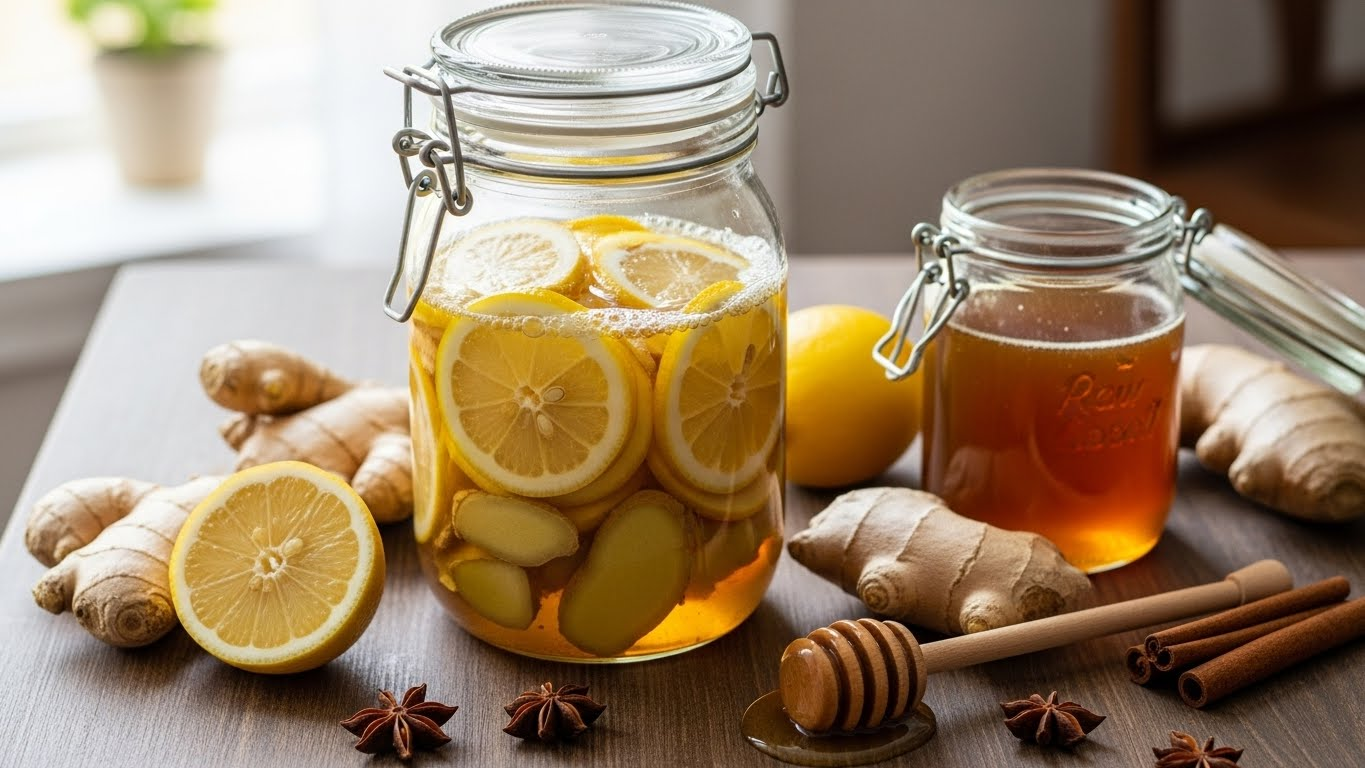
This recipe uses raw honey to ferment lemon and ginger. It creates a tangy syrup. People make it for gut support and cold relief. Research shows it may help digestion and boost immunity. Results vary by person.
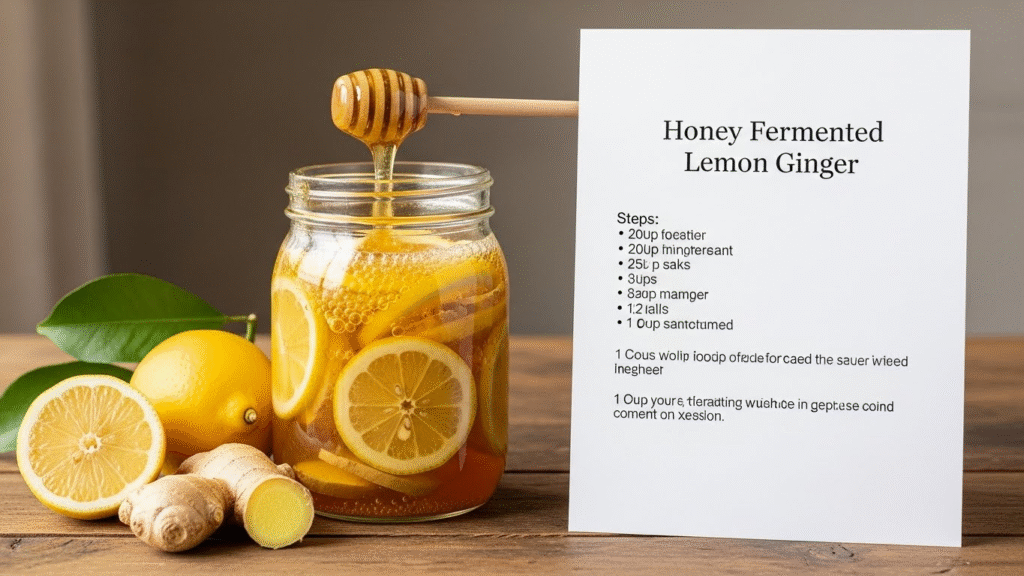
Main Benefits
- Aids gut health with natural probiotics.
- Provides vitamin C from lemons.
- Offers anti-inflammatory effects from ginger.
Quick Recipe Overview Wash 2 organic lemons and 4 inches of fresh ginger. Slice them thin. Layer in a clean pint jar. Pour 1 cup raw honey over top. Cover loosely. Let sit at room temperature for 2 weeks. Stir daily.
Health Notes Studies suggest fermented foods support good bacteria in the gut. Lemon adds antioxidants. Ginger may ease nausea. Always check with a doctor for health advice.
What Is Honey Fermented Lemon Ginger?
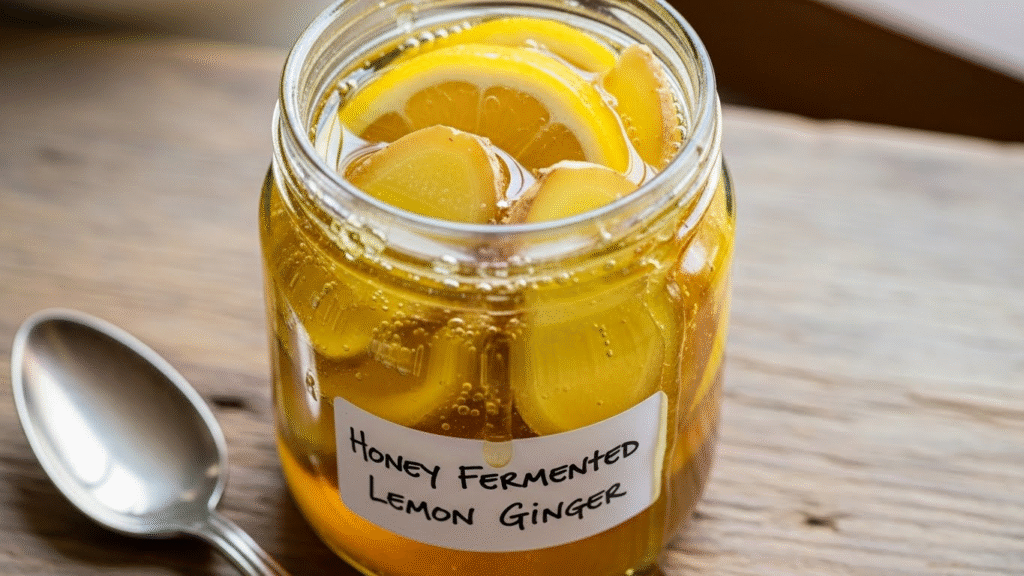
Honey fermented lemon ginger is a home-made mix. You slice fresh lemons and ginger. Then cover them with raw honey. The mix ferments over time. This creates a syrup with a tangy taste. It comes from natural yeasts in the honey. Water from the lemon and ginger starts the process. No need for added starters. The result is a probiotic-rich item. Many use it as a daily tonic.
Why Make This Ferment?
This ferment combines three strong items. Raw honey has natural enzymes. Lemons bring vitamin C. Ginger adds warmth. Together, they may support health. Fermentation makes nutrients easier to absorb. It also preserves the mix for months.
Ingredients You Need
Use fresh items for best results.
- 2 medium organic lemons (unwaxed, to keep skin safe).
- 4 inches fresh ginger root (peeled or unpeeled).
- 1 cup raw unpasteurized honey (must be raw for fermentation).
These amounts fill a pint jar. Adjust for larger batches. Organic lemons avoid chemicals. Raw honey starts the ferment.
| Ingredient | Amount | Notes |
|---|---|---|
| Lemons | 2 medium | Slice thin, include skin for flavor. |
| Ginger | 4 inches | Slice or grate for even spread. |
| Honey | 1 cup | Raw type only; pasteurized won’t ferment. |
How to Make Honey Fermented Lemon Ginger Step by Step
Follow these steps. The process takes 10 minutes to prep. Ferment for 2-4 weeks.
- Clean your tools. Wash a pint glass jar with hot water. Dry it well. No need for full sterilization.
- Prepare the produce. Wash lemons and ginger. Slice lemons into thin rounds. Peel ginger if desired. Slice it thin or grate it.
- Layer in the jar. Add a layer of lemon slices. Then add ginger. Repeat until half full.
- Add honey. Pour half the honey over. Use a spoon to press down. This removes air pockets.
- Finish layering. Add more lemon and ginger. Pour remaining honey. Fill to cover all slices. Leave 1 inch space at top.
- Cover and ferment. Use a cloth or loose lid. This lets gases escape. Place in a dark spot at room temperature (65-75°F).
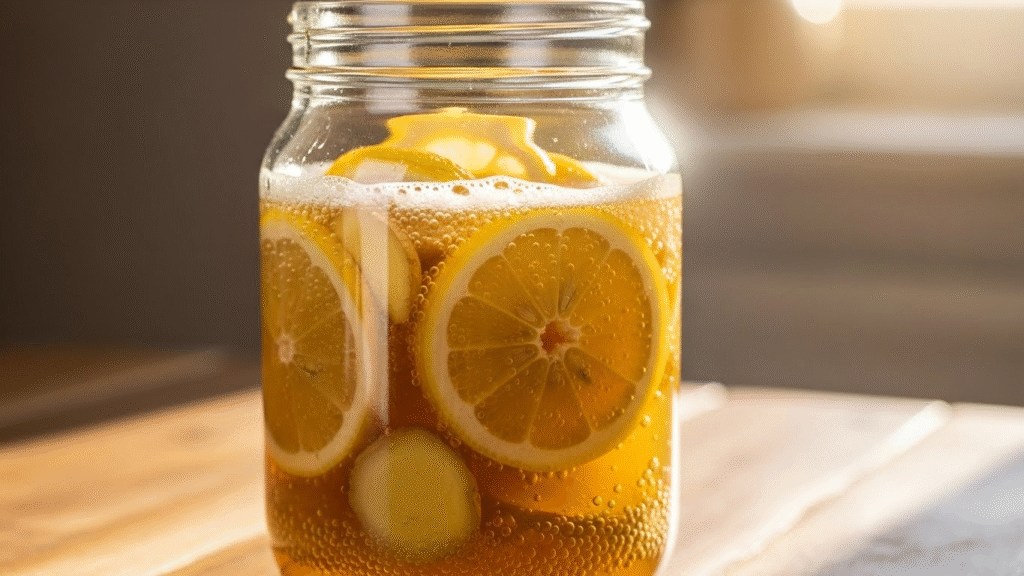
- Check daily. Stir or shake each day. Look for bubbles after 3-5 days. This shows fermentation.
- Test readiness. After 2 weeks, taste it. The honey turns runny. Flavors blend. If tangy, it’s done.
- Store it. Tighten the lid. Keep in fridge for up to 6 months. Or leave at room temp for slower ferment.
Common user questions cover ratios. Use 2:1 lemon to ginger by volume. This balances tart and spice.
Tips for Success
Avoid mistakes with these notes.
- Use raw honey only. Heated honey kills yeasts.
- Watch for mold. If seen, discard the batch.
- Burp the jar daily. This prevents pressure build-up.
- If honey is thick, warm it slightly under 90°F.
- For variations, add turmeric slices. Or black pepper for heat.
- Common errors: Too much water dilutes it. Or forgetting to stir.
Table of Troubleshooting:
| Issue | Cause | Fix |
|---|---|---|
| No bubbles | Wrong honey | Use raw type; wait longer. |
| Mold forms | Not covered well | Discard; start fresh with clean jar. |
| Too sour | Long ferment | Refrigerate to slow it down. |
| Honey stays thick | Low moisture | Add more lemon slices next time. |
Health Benefits Backed by Research
Fermented foods aid gut microbes. Lemons provide vitamin C for immune cells. Ginger reduces swelling. Honey adds antioxidants.
From top pages, themes focus on daily wellness. User searches ask about gut boosts. Like, does it help IBS? Or reduce inflammation? Studies from health sites support digestion aid. But not all claims are proven. Drink 1-2 spoons daily in water. This may ease nausea or bloating. People also ask about weight effects. No strong proof, but it may curb cravings.
One theme is cold prevention. Mix with hot water for relief. Another is energy. Nutrients might help steady blood sugar.
Ways to Use Your Ferment
This mix works in many dishes.
- Drinks: Add 1 spoon to hot water for tea. Or to smoothies for tang.
- Meals: Drizzle on salads. Use in marinades for meat.
- Snacks: Stir into yogurt. Or spread on bread.
- Desserts: Mix into oatmeal. Or top fruit.
Table of Use Ideas:
| Category | Ideas | How Much |
|---|---|---|
| Drinks | Hot tea, iced water | 1-2 spoons per cup |
| Meals | Dressings, glazes | 1 spoon per serving |
| Snacks | Yogurt, toast | 1 spoon as topping |
User intent includes recipes. Like, how to make a tonic? Or add to soup?
Frequently Asked Questions
How long does it last? Up to 6 months in fridge. Check for off smells.
Can kids eat it? Honey is not for under 1 year due to botulism risk. For adults, the acid level makes it safe.
What if no bubbles? Wait a few more days. Or check honey quality.
Is it probiotic? Yes, from natural ferment. But amounts vary.
Can I add other items? Try herbs like rosemary. Or spice with cayenne.
People also ask about daily intake. Start small to test tolerance.
Final Thoughts
This ferment offers a simple way to add probiotics at home. It blends flavors for health support. Try it for gut balance or cold days. Results depend on consistent use.