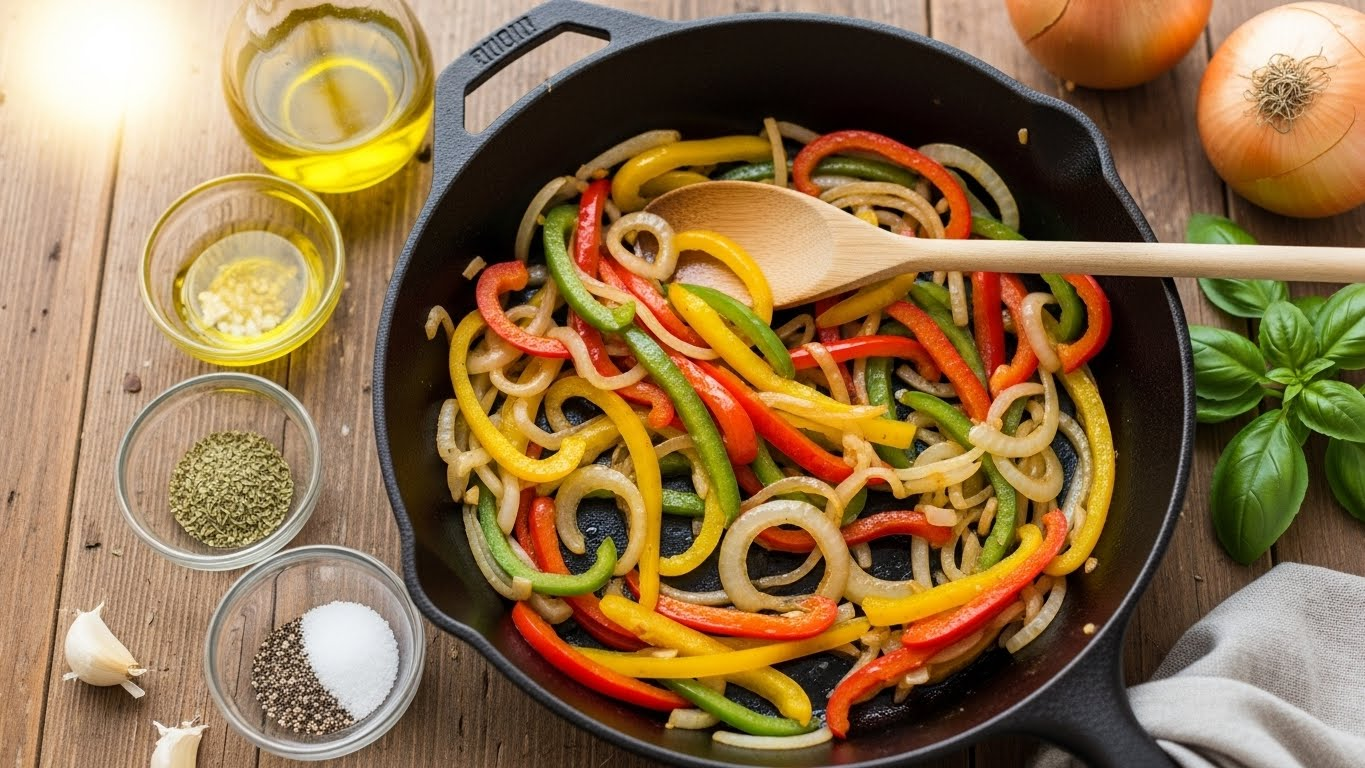
Sauteed peppers and onions are one of the most useful recipes you can keep in your cooking toolbox. This simple dish transforms a few basic ingredients into a sweet, colorful side that works with almost any meal. Whether you need a quick weeknight side or a topping for sandwiches, this recipe delivers every time.
Why This Recipe Works
This method brings out the natural sweetness in both vegetables without needing fancy ingredients. The high heat creates light char marks while keeping the insides tender. You get perfect caramelization in just 15 minutes.
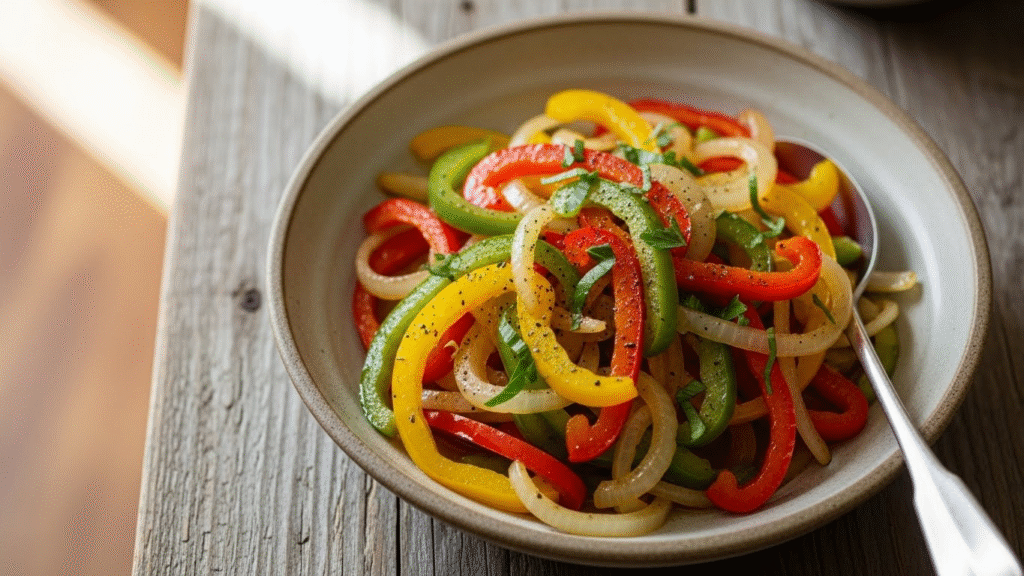
The secret is the cooking technique. Start with a hot pan and let the vegetables sit without stirring too much. This creates those golden-brown edges that add so much flavor.
What You’ll Need
Main Ingredients
- 2-4 bell peppers (any color)
- 1-2 onions (yellow, white, or red)
- 2 tablespoons olive oil
- Salt and black pepper to taste
- Optional: garlic powder, dried oregano, or red pepper flakes
Best Pepper Choices
Red, yellow, and orange peppers are naturally sweeter. Green peppers have a more sharp, tangy taste. Mix colors for both flavor variety and a bright presentation.
Best Onion Choices
Yellow onions work best because they turn sweet and golden when cooked. White onions also work well. Red onions add extra color and a slightly milder taste.
Step-by-Step Instructions
Prep Your Vegetables
- Remove stems, seeds, and white ribs from peppers
- Slice peppers into strips about 1/4 to 1/2 inch thick
- Peel and halve onions, then slice into similar-sized strips
- Keep pieces uniform so everything cooks evenly
Cook to Perfection
- Heat a large skillet over medium-high heat
- Add oil and let it warm for 30 seconds
- Add peppers and onions to the hot pan
- Season with salt and pepper
- Let vegetables sit for 2-4 minutes without stirring (this creates the char)
- Stir and continue cooking for 12-15 minutes total
- Cook until onions turn translucent and peppers soften
- For extra flavor, add garlic in the last minute of cooking
Cooking Time Guide
- Crisp-tender: 10-12 minutes (vegetables still have some bite)
- Fully tender: 15-17 minutes (soft and caramelized)
- Very soft and sweet: 20+ minutes (almost jam-like texture)
Pro Tips for Best Results
Get That Perfect Char
Don’t stir too often. Let the vegetables sit on the hot pan for several minutes before mixing. This contact with the heat source creates those tasty brown spots.
Avoid Steaming
Use a large pan and don’t overcrowd it. Too many vegetables packed together will release moisture and steam instead of getting that nice golden color.
Control the Heat
If vegetables start to burn, turn down the heat slightly. You want caramelization, not blackened edges. Add a splash of water if the pan gets too dry.
Add Garlic Last
Fresh garlic burns quickly. Add it during the last minute of cooking to avoid bitter, burnt garlic flavor. Garlic powder can go in at the start.
Flavor Variations
Italian Style
Add dried basil, oregano, and thyme. Finish with a drizzle of balsamic vinegar and fresh basil leaves.
Mexican Style
Season with cumin, chili powder, or taco seasoning. Squeeze fresh lime juice over the top before serving.
Mediterranean Style
Use Greek seasoning instead of Italian herbs. Add kalamata olives, sun-dried tomatoes, and finish with lemon juice.
Spicy Version
Double the red pepper flakes or add sliced jalapenos. For even more heat, include a pinch of cayenne pepper.
How to Use Peppers and Onions
As a Side Dish
Serve alongside:
- Grilled chicken or steak
- Pork chops
- Fish fillets
- Rice or quinoa bowls
- Roasted potatoes
As a Topping
Add to:
- Burgers and hot dogs
- Italian sausage sandwiches
- Cheesesteaks
- Tacos and fajitas
- Pizza
In Other Recipes
Mix into:
- Scrambled eggs or omelets
- Quesadillas and burritos
- Pasta dishes
- Fried rice
- Grain bowls
Storage and Make-Ahead Tips
Refrigerator Storage
Store cooled peppers and onions in an airtight container for up to 4 days. They make great meal prep for the week ahead.
Reheating
Warm in a skillet over medium heat for best texture. You can also microwave them, but the skillet keeps them from getting soggy.
Freezing
These vegetables can be frozen, but they may become softer when thawed. Freeze in portions for easy use later. Thaw overnight in the refrigerator.
Common Mistakes to Avoid
Adding Salt Too Early
Wait until vegetables start cooking before adding salt. Adding salt to raw vegetables draws out moisture and can make them soggy instead of caramelized.
Using Cold Oil
Always heat your pan first, then add oil. This prevents sticking and helps achieve better browning.
Cutting Pieces Too Large
Thick pieces take longer to cook and may not soften properly. Keep slices thin and uniform.
Cooking on Low Heat
Medium-high heat is needed for proper caramelization. Low heat will steam the vegetables instead of browning them.
Nutrition Benefits
Bell peppers pack impressive amounts of vitamin C. Just one serving provides more than 100% of your daily needs. They also contain vitamin A, fiber, and antioxidants.
Onions support heart health and contain compounds that may help reduce inflammation. They’re also low in calories while adding lots of flavor.
Frequently Asked Questions
How long does it take to cook peppers and onions?
Most recipes take 10-15 minutes for tender vegetables with some char. Cooking longer (20+ minutes) creates softer, sweeter results.
Can I use frozen peppers and onions?
Yes, but fresh vegetables give better texture and flavor. Frozen vegetables release more water and won’t caramelize as well.
What oil should I use?
Olive oil works great and adds flavor. You can also use vegetable oil, canola oil, or avocado oil. Butter burns more easily, so use a mix of butter and oil if you want butter flavor.
Can I add other vegetables?
Absolutely. Try adding mushrooms, zucchini, tomatoes, or corn. Give peppers and onions a head start, then add quicker-cooking vegetables.
Why do my peppers and onions taste bitter?
This usually happens with green peppers that sit too long after cooking. Use sweeter red, yellow, or orange peppers to avoid bitterness.
Recipe Variations by Cuisine
For Fajitas
Cook peppers and onions with fajita seasoning. Add lime juice at the end. Serve with warm tortillas, sour cream, and guacamole.
For Italian Sausage
Add tomato sauce and serve over cooked Italian sausages on hoagie rolls. Top with melted provolone cheese.
For Breakfast
Scramble with eggs and cheese. Or use as filling for breakfast burritos with bacon and potatoes.
Equipment You’ll Need
- Large skillet or frying pan (12-inch works best)
- Sharp knife for slicing
- Cutting board
- Wooden spoon or spatula for stirring
A nonstick pan distributes heat evenly and prevents sticking. Cast iron pans also work well because they hold heat, which helps with caramelization.
Final Thoughts
This easy peppers and onions recipe proves that simple cooking often tastes best. With just a few ingredients and 15 minutes, you can create a side dish that works with countless meals. The natural sweetness of caramelized vegetables needs no fancy sauces or complicated techniques.
Master this basic recipe, then try the variations to keep meals interesting. Keep this technique in your regular rotation and you’ll always have a quick answer for “what should I serve with dinner?”