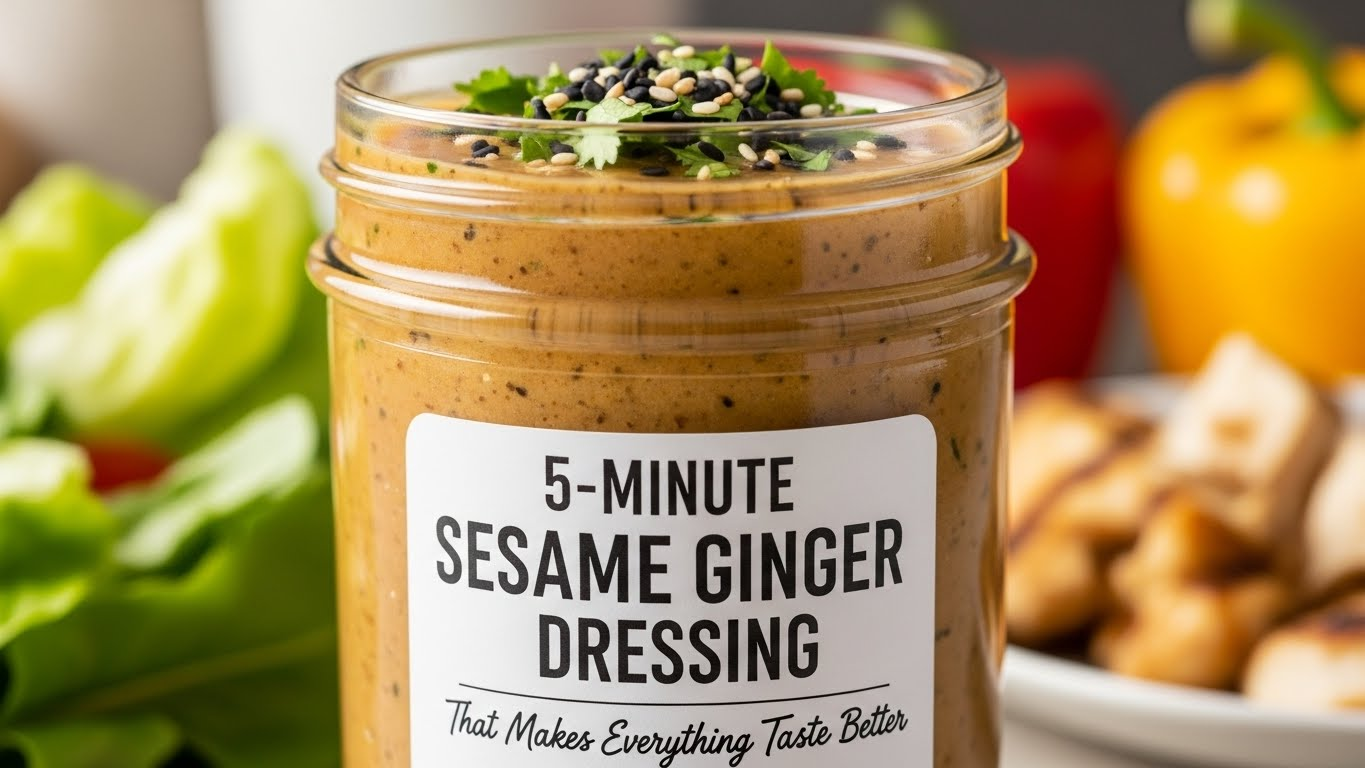
This sesame ginger dressing recipe takes just 5 minutes to make and transforms any salad into something special. You’ll get that restaurant-quality taste at home with ingredients you probably already have in your pantry.
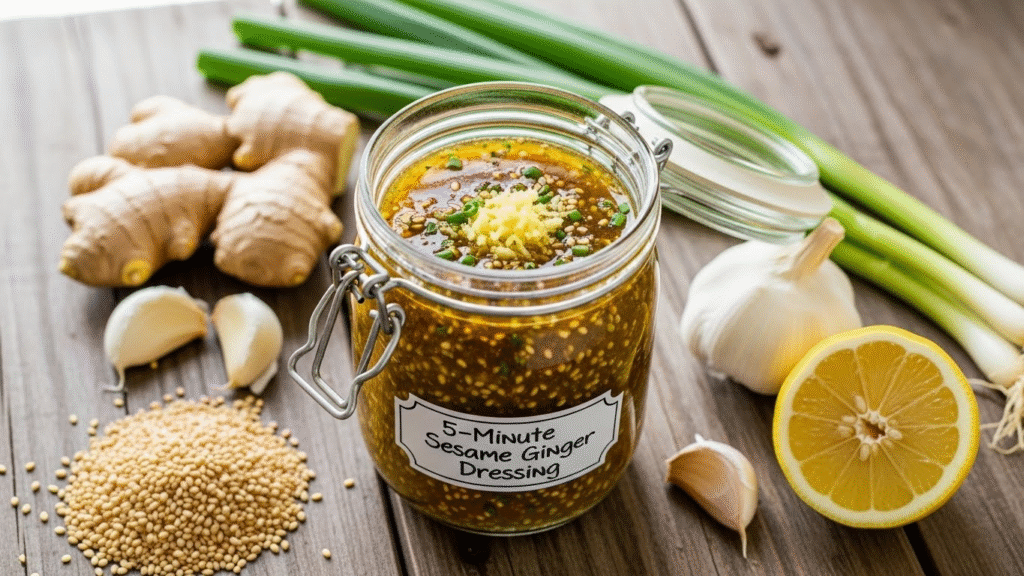
What Is Sesame Ginger Dressing?
Sesame ginger dressing is an Asian-inspired sauce that combines the nutty flavor of sesame oil with the bright, spicy kick of fresh ginger. It’s sweet, salty, tangy, and a little bit spicy all at once.
This dressing is popular at Japanese restaurants where it’s served with those simple iceberg lettuce salads. But it does so much more than dress greens. You can use it as a marinade, dipping sauce, or stir-fry sauce.
Ingredients You Need
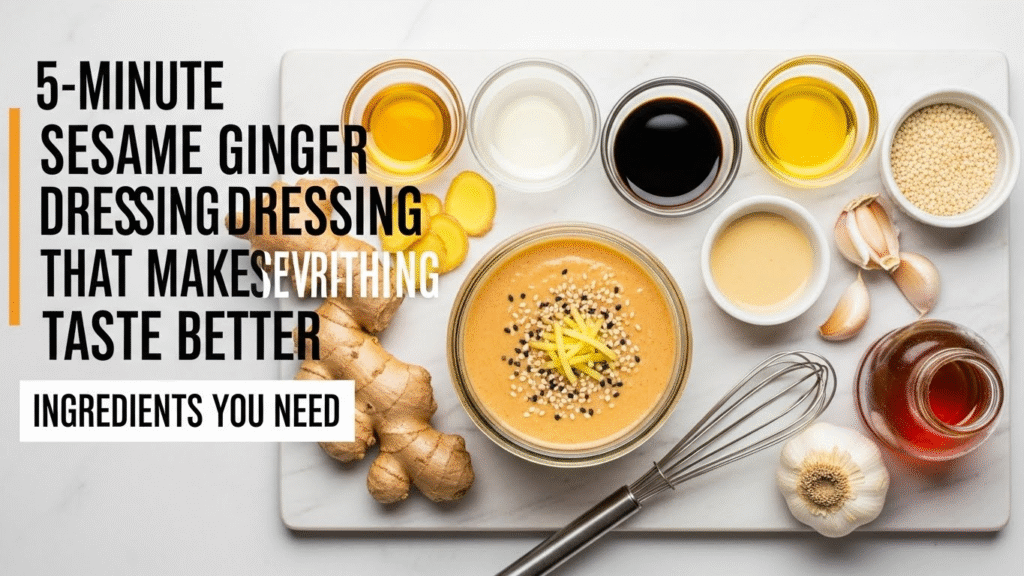
Essential Ingredients
Toasted Sesame Oil – This is the star ingredient. Toasted sesame oil has a rich, nutty flavor that regular sesame oil doesn’t have. You only need a small amount because the flavor is strong.
Neutral Oil – Olive oil, avocado oil, or grapeseed oil work well. This balances the strong sesame flavor and makes the dressing less heavy.
Rice Vinegar – This mild vinegar adds the tangy element. It’s not as sharp as white vinegar or apple cider vinegar. If you only have seasoned rice vinegar, use less sweetener in the recipe.
Soy Sauce or Tamari – This adds the salty, savory taste. Use tamari if you need a gluten-free version. Coconut aminos work too.
Fresh Ginger – Grate it on a fine grater or microplane. Fresh ginger gives this dressing its signature kick. Ground ginger won’t give you the same bright flavor.
Garlic – One or two cloves add depth. Mince it very fine or grate it.
Sweetener – Honey or maple syrup balance the salty and tangy flavors. Maple syrup makes the dressing vegan.
Optional Add-Ins
Tahini – Makes the dressing creamy and adds more sesame flavor. Use 1-2 tablespoons.
Sriracha or Red Pepper Flakes – Add heat if you like spicy food. Start with 1 teaspoon.
Lime or Lemon Juice – Adds extra brightness. Use 1-2 teaspoons.
Sesame Seeds – Sprinkle them in for texture and visual appeal.
Miso Paste – White miso adds umami depth. Use 1 tablespoon.
Basic Recipe
Ingredients
- 1/4 cup toasted sesame oil
- 1/4 cup neutral oil (olive, avocado, or grapeseed)
- 3 tablespoons rice vinegar
- 2 tablespoons soy sauce or tamari
- 2 tablespoons honey or maple syrup
- 1 tablespoon fresh ginger, grated
- 2 cloves garlic, minced
- Pinch of salt
Instructions
- Add all ingredients to a jar with a tight lid
- Close the jar and shake hard for 1 minute
- Taste and adjust sweetness, salt, or tang as needed
- Use right away or store in the fridge
That’s it. No blender needed unless you want an ultra-smooth texture.
Blender Method
If you prefer a creamy, smooth dressing:
- Add ginger and garlic to blender first
- Add remaining ingredients
- Blend on high for 30 seconds
- Add water 1 tablespoon at a time if too thick
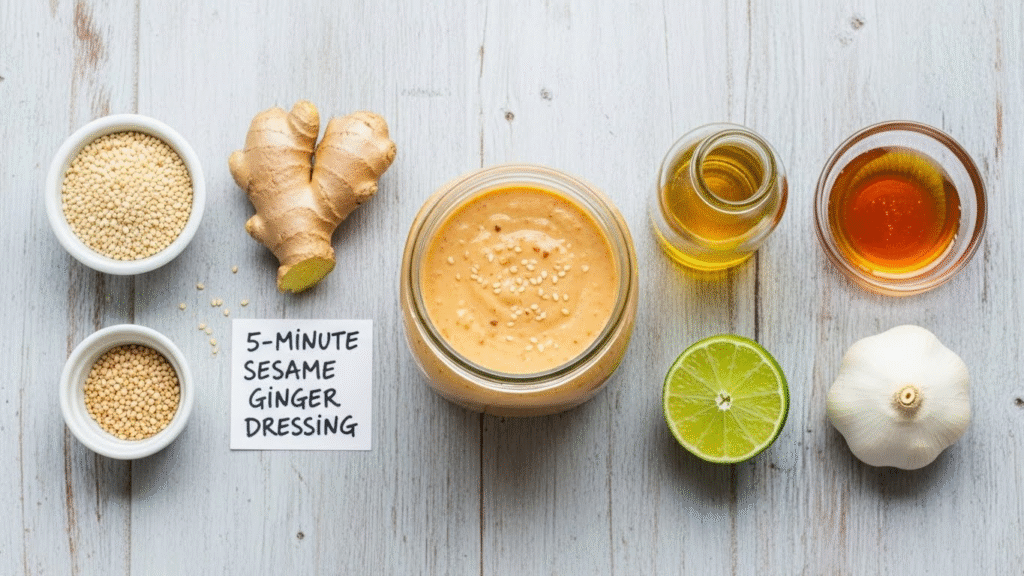
How to Use This Dressing
On Salads
This dressing works best with crunchy vegetables. Try it on:
- Shredded cabbage (green, red, or napa)
- Romaine or iceberg lettuce
- Kale or mixed greens
- Coleslaw
- Asian-style salads with carrots, peppers, and cucumbers
- Cold noodle salads
- 10 Vegetable Soup Recipes here, mentioning how this dressing can also be drizzled over roasted vegetables as a side dish.
As a Marinade
Marinate chicken, beef, shrimp, tofu, or salmon for 30 minutes to 2 hours. The acid in the vinegar tenderizes the meat while the other flavors soak in.
Works great for:
- Chicken thighs or breasts
- Pork chops
- Salmon fillets
- Shrimp skewers
- Baked tofu
- Beef stir-fry strips
As a Dipping Sauce
Serve alongside:
- Spring rolls or rice paper rolls
- Dumplings or potstickers
- Wontons
- Egg rolls
- Grilled skewers
- Raw vegetables (cucumbers, snap peas, carrots)
As a Stir-Fry Sauce
Add this dressing to your stir-fry during the last 2 minutes of cooking. If you want it thicker, mix 1 tablespoon cornstarch with 2 tablespoons water and add it to the pan.
On Grain Bowls
Drizzle over rice bowls, quinoa bowls, or Buddha bowls. It brings all the ingredients together. Soft Tofu Recipes with Rice here, noting how this dressing complements rice-based dishes perfectly.
Over Vegetables
Try it on:
- Roasted broccoli or Brussels sprouts
- Baked sweet potatoes
- Sautéed kale
- Steamed asparagus
- Roasted carrots
Tips for the Best Results
Use Fresh Ginger
Fresh ginger makes a huge difference. The jarred minced ginger doesn’t have the same bright, spicy flavor. Buy a ginger root and freeze it. Frozen ginger is easier to grate and lasts for months.
Get Good Tahini
If you’re adding tahini, make sure it’s smooth and pourable. The dry, stiff stuff at the bottom of the jar will make your dressing chunky. Good brands include Soom, Cedar’s, and Trader Joe’s.
Don’t Skip the Toasted Sesame Oil
Regular sesame oil won’t give you that nutty, rich flavor. Toasted sesame oil is what makes this dressing taste like the restaurant version.
Taste as You Go
Everyone’s taste is different. Start with the recipe as written, then adjust:
- Too sour? Add more sweetener
- Too sweet? Add more vinegar or a pinch of salt
- Not enough kick? Add more ginger or a dash of sriracha
- Too thick? Add water 1 tablespoon at a time
Let It Rest
If you have time, let the dressing sit in the fridge for 30 minutes to 2 hours. This lets the flavors blend together. Fresh garlic and ginger need time to infuse into the oil.
Storage and Shelf Life
Store this dressing in an airtight container or jar in the refrigerator.
With fresh garlic and ginger: Use within 3-5 days. Fresh garlic has low acidity and can develop bacteria if stored too long.
With powdered garlic and ginger: Lasts up to 1-2 weeks.
Without garlic: Lasts up to 2 weeks.
The dressing will thicken when cold. Let it sit at room temperature for 10 minutes or shake it well before using.
Common Questions
Can I Make This Dairy-Free?
Yes. This recipe is naturally dairy-free as long as you don’t add any mayo or cream.
Can I Make It Vegan?
Use maple syrup instead of honey. The rest of the ingredients are already vegan.
Is This Gluten-Free?
Use tamari or coconut aminos instead of regular soy sauce. Check that your rice vinegar is labeled gluten-free. Some brands contain malt.
Can I Use Ground Ginger?
You can, but the flavor won’t be as good. Use 1/4 teaspoon ground ginger in place of 1 tablespoon fresh. The dressing will lack that fresh, bright taste.
Why Is My Dressing Separating?
Oil and vinegar naturally separate. This is normal. Just shake the jar before each use. Adding tahini or a tiny bit of mustard helps keep it emulsified.
Can I Freeze This Dressing?
It’s not recommended. The dressing will separate when thawed and won’t have the same texture.
How Much Dressing Do I Need for a Salad?
This recipe makes about 3/4 to 1 cup of dressing. That’s enough for 4-6 large salads. Use 2-3 tablespoons per serving.
Variations to Try
Creamy Sesame Ginger Dressing
Add 2 tablespoons tahini or peanut butter. Blend until smooth. You might need to thin it with a little water.
Spicy Sesame Ginger Dressing
Add 1-2 teaspoons sriracha or 1/2 teaspoon red pepper flakes.
Miso Sesame Ginger Dressing
Add 1 tablespoon white miso paste. This adds extra umami and makes the dressing thicker.
Citrus Sesame Ginger Dressing
Add 2 teaspoons fresh lime or lemon juice for extra brightness.
Restaurant-Style Version
Add 1 tablespoon finely minced red onion and a pinch of black pepper.
Meal Ideas
Quick Asian Salad
Mix shredded cabbage, carrots, cucumber, and bell pepper. Add edamame or chickpeas for protein. Top with cashews or peanuts and this dressing. Easy International Meals collection here for more quick Asian-inspired dishes.
Noodle Salad
Toss cold soba noodles or rice noodles with this dressing. Add steamed broccoli, shredded carrots, and tofu.
Grain Bowl
Start with brown rice or quinoa. Add roasted sweet potato, sautéed kale, chickpeas, and avocado. Drizzle with dressing.
Grilled Chicken Salad
Marinate chicken in this dressing for 1 hour. Grill and slice. Serve over greens with more dressing on top. Cultural Recipes for a Worldly Dinner Party for ideas on incorporating this into a themed menu.
Why Make Your Own
Store-bought sesame ginger dressing often contains a lot of sugar and preservatives. Some bottles have corn syrup, xanthan gum, and artificial flavors.
When you make it at home:
- You control the sweetness
- You use fresh ingredients
- It costs less
- You know exactly what’s in it
- It tastes better
Most store-bought versions cost $4-6 per bottle. This homemade version costs about $2-3 and tastes fresher.
Nutritional Information
Per 2-tablespoon serving (approximate):
- Calories: 120-140
- Fat: 12-14g
- Carbohydrates: 4-6g
- Protein: 0-1g
- Sodium: 200-250mg
The exact numbers depend on which oils and sweeteners you use.
Pairing Suggestions
This dressing pairs well with:
- Crunchy vegetables
- Mild proteins (chicken, tofu, white fish)
- Rice and noodles
- Cabbage-based slaws
- Spring rolls
It complements dishes from Chinese, Japanese, Korean, and Thai cuisines. Traditional Recipes That Tell Cultural Stories and Authentic Global Dishes for more Asian-inspired recipe ideas.
Final Thoughts
This sesame ginger dressing is one of those recipes you’ll make again and again. It’s quick, uses simple ingredients, and makes everything taste better.
The key is using fresh ginger, good quality toasted sesame oil, and balancing the sweet, salty, tangy, and spicy flavors to your taste.
Make a batch on Sunday and use it all week. Toss it with salads, pour it over grain bowls, use it as a marinade, or keep it as a dipping sauce in the fridge.
Once you try this homemade version, you won’t want to go back to store-bought.
Don’t forget to check out our other dressing and sauce recipes in our Recipe Collection for more kitchen staples to make at home.